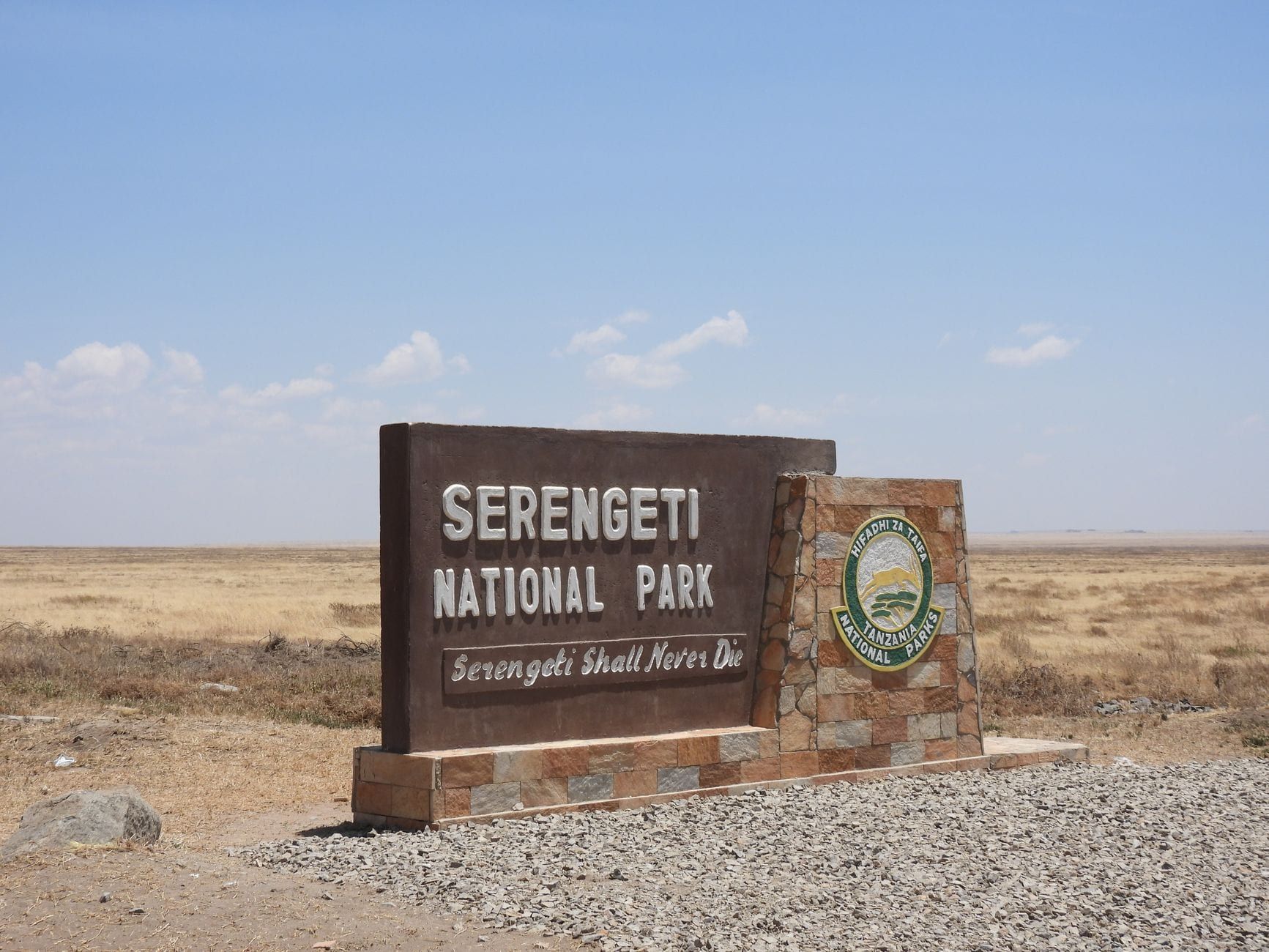
Serengeti National Park holds one of the densest concentrations of large mammals left on Earth: roughly 4,000 lions, 2 million wildebeest, 300,000 zebra and 900,000 Thomson's gazelle move across the same 14,763 square kilometers of grassland. Add more than 300 mammal species and over 500 recorded birds, and you get a park where a single game drive can turn up lions on a kopje, a leopard draped over a sausage-tree branch and a herd of buffalo wallowing in mud, all within an hour.
This guide breaks down what you'll actually see: the Big Five, the wider Big Nine, the predators and grazers that fill in the gaps, and the birds worth pointing binoculars at. It also covers what most species lists skip entirely — which month and which corner of the park give you the best odds of seeing each one. For the practical side of getting here, see our directions and transport guide.
What Makes Serengeti's Wildlife Unique
Serengeti covers 14,763 square kilometers of savannah, grassland and woodland in northern Tanzania, an area a bit bigger than the Bahamas, protected since 1951 and inscribed as a UNESCO World Heritage Site in 1981. UNESCO's listing cites two things specifically: the largest unaltered land migration on the planet, and an ecosystem productive enough to sustain four globally threatened species — black rhino, elephant, African wild dog and cheetah — inside one park.
The long species list comes down to terrain. Flat, treeless short-grass plains dominate the south near Ndutu and Naabi Hill, ideal for grazers that need a clear sightline on approaching predators. Head north and the ground turns to acacia woodland and riverine forest along the Mara and Grumeti rivers, cover that suits leopards, colobus monkeys and forest birds the open plains don't have. Granite kopjes — outcrops of rock worn down over roughly a million years — break up the grassland everywhere, giving lions, leopards and rhino both shade and a lookout point.
The park doesn't stop at Tanzania's borders. It's unfenced and continuous with the Ngorongoro Conservation Area, Maswa, Grumeti and Ikorongo reserves, and Kenya's Maasai Mara, forming a roughly 30,000-square-kilometer ecosystem that the migrating herds treat as one territory. For the full picture of the park's layout and history, see our Serengeti overview.
The Big Five in the Serengeti
The term "Big Five" has nothing to do with size. Colonial-era big-game hunters coined it for the five animals hardest, and most dangerous, to hunt on foot: lion, leopard, elephant, buffalo and rhino. Serengeti is one of the few parks left where you have a real shot at all five on one visit, though one of them takes patience and a fair bit of luck.
Lion
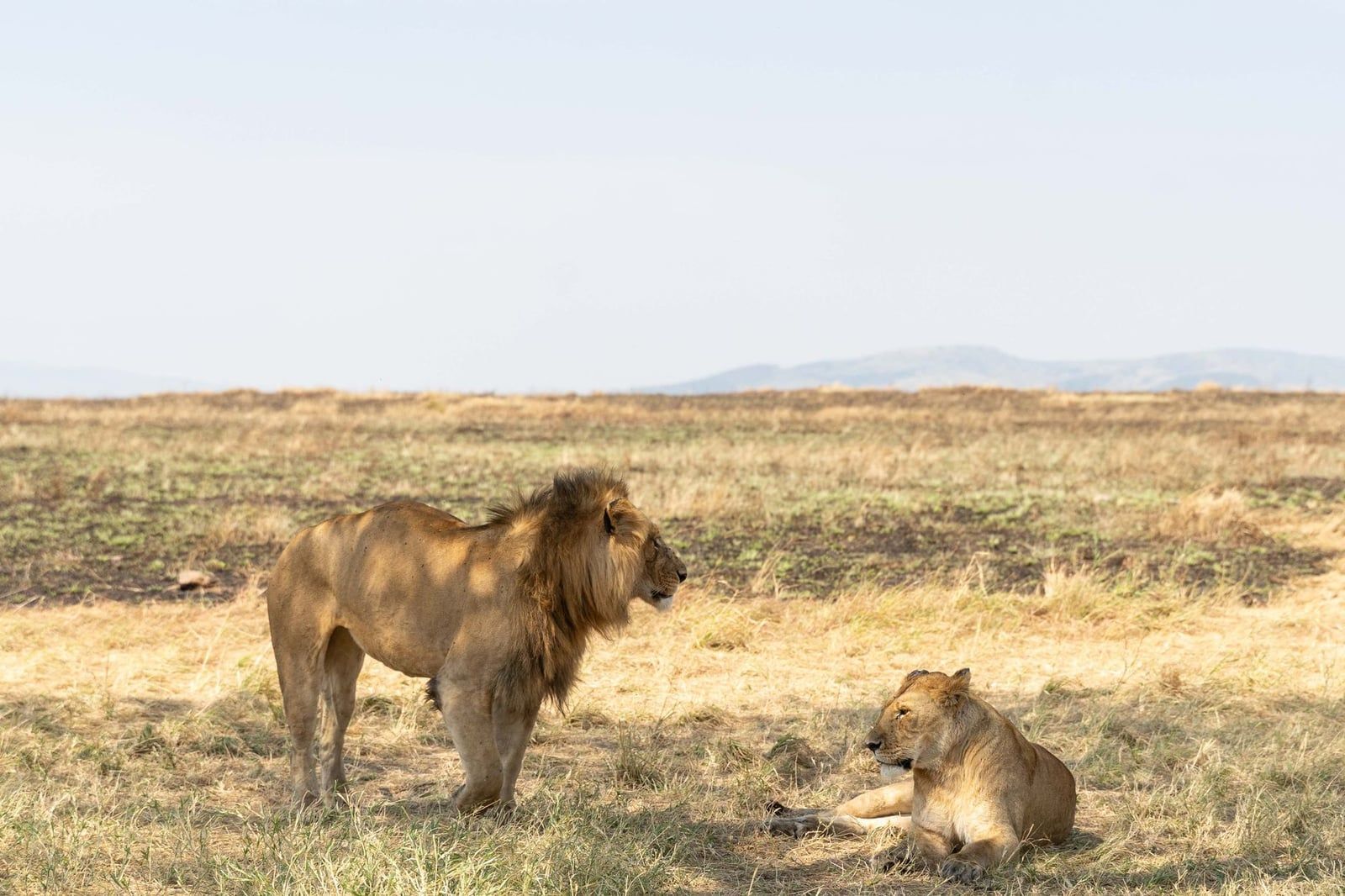
Roughly 4,000 lions live across the Serengeti-Mara ecosystem, among the largest populations left in Africa. Prides often claim a kopje as home base, using the rock for shade and a clear view of anything moving on the plain below. Seronera Valley, in the park's center, is the single most reliable spot to find one lounging on a boulder at any time of year — it's usually the first stop on any Serengeti itinerary for that reason.
Leopard
Leopards are harder to find. Camera-trap studies put density around 5.5 individuals per 100 square kilometers, and the park holds an estimated 1,000 overall. They hunt mostly alone at dusk and dawn, then drag kills into a tree to keep them from hyenas and lions. Seronera's sausage trees along the river are the classic place to spot one draped over a branch, tail hanging below the leaves — bring a guide who knows which trees to check.
Elephant
About 2,700 elephants move through Serengeti in matriarch-led family herds, and a big bull can weigh up to 7,000 kg. Dry season, June through October, pushes them toward remaining waterholes and rivers, where you'll often find a dozen or more standing shoulder to shoulder through the heat of the afternoon. Calves stay tucked between adult legs the whole time, which is the giveaway that you're watching a family group rather than a bachelor herd of young males.
Cape Buffalo
Buffalo travel in herds that can run into the hundreds, grazing shoulder to shoulder and rarely straying far from water. They're behind more guide-cautioned encounters than any other Big Five species: an isolated or wounded bull will charge without warning. Old males pushed out of the herd, sometimes called "askaris," are the ones guides watch closest. It's the least photogenic of the five and the one most visitors underestimate.
Black Rhino
Black rhino is the rarest sighting of the five. Poaching cut the population from around 1,000 to under 70 by the 1980s; conservation work has since rebuilt numbers to roughly 200 across the wider ecosystem. Nearly all of them stay close to the Moru Kopjes in the west-central park, and finding one takes an experienced guide and a fair bit of luck. Treat a rhino sighting as a bonus, not something to plan a trip around. A multi-day Serengeti safari that covers Seronera and Moru Kopjes gives you good odds on the other four; add extra days with a specialist guide if rhino is the one you're chasing.
Beyond the Big Five: The Big Nine and Other Icons
Add cheetah, giraffe, hippo and zebra to the Big Five and you get the "Big Nine," a newer term that better reflects what a Serengeti game drive actually turns up. None of the four are hard to find — zebra, in particular, you'll spot within minutes of entering almost any gate.
Cheetah
Cheetahs hit 110-120 km/h in short bursts, faster than any other land animal, but they're the shyest of the big cats. They can't defend a kill from hyenas or lions, so they eat fast and stay near cover. The short-grass plains around Naabi Hill and the south are the best hunting ground for them, and the best place to sit and watch one work a herd of gazelle.
Masai Giraffe
About 33,000 Masai giraffe live wild in Tanzania, and Serengeti's acacia woodland feeds a good share of that population. They're the tallest land animal alive, and each one's patchy, jigsaw-piece coat is unique — watch the same small herd over a few days and you'll start recognizing individuals by their markings alone.
Hippo
Hippos spend daylight hours packed into pools along the Seronera and Mara rivers, dozens at a time, only leaving the water after dark to graze. The hippo pool near Seronera is one of the easiest sightings in the whole park — park at the viewing point and you'll likely count fifteen or twenty animals grunting and jostling within a few meters of the bank.
Plains Zebra
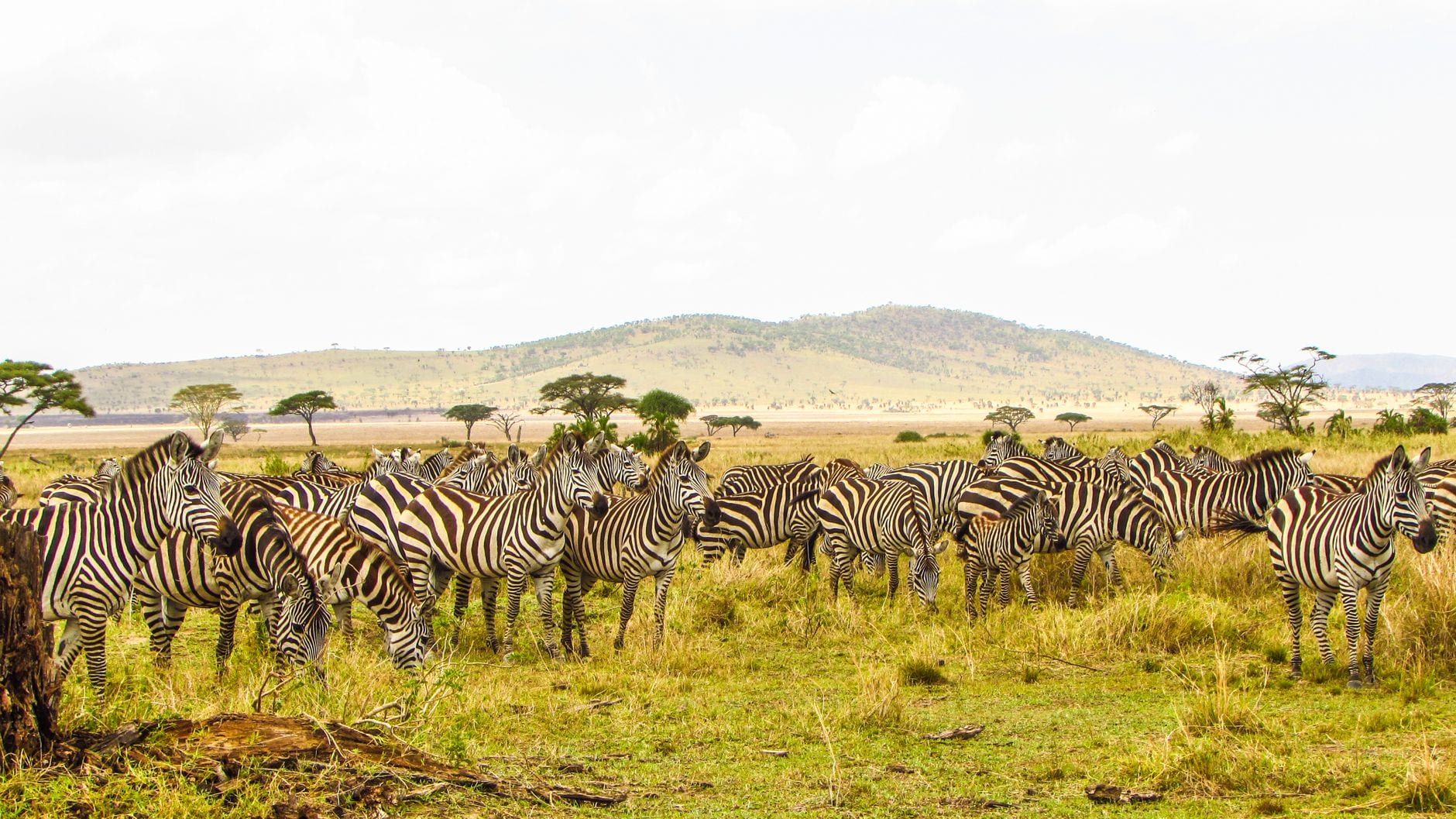
Around 300,000 zebra move with the wildebeest migration, and the partnership works because the two species complement each other. Zebra have sharper memory of past migration routes and better eyesight; wildebeest bring numbers and a keener sense of smell and hearing. Their grazing habits differ too — zebra crop the taller grass stems, opening up the shorter growth wildebeest prefer, so the two stay in loose, mixed herds for months.
Wildebeest
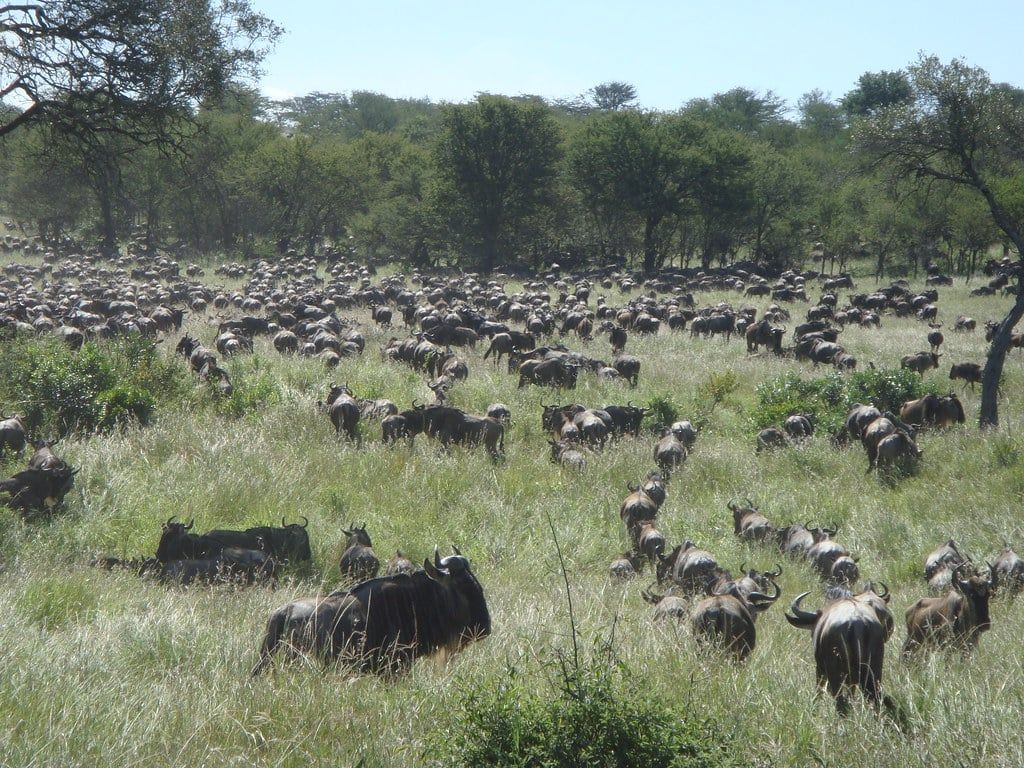
Wildebeest are the migration's core: about 2 million move in a roughly circular route through the ecosystem each year, grazing their way from the southern plains to the northern woodlands and back. Individually unremarkable animals become something else entirely in these numbers — a single herd crossing a valley can take twenty minutes to pass a fixed point. Their migration route sets the rhythm for most of the park's other wildlife, since predators time their own movements around the herds.
Spotted Hyena
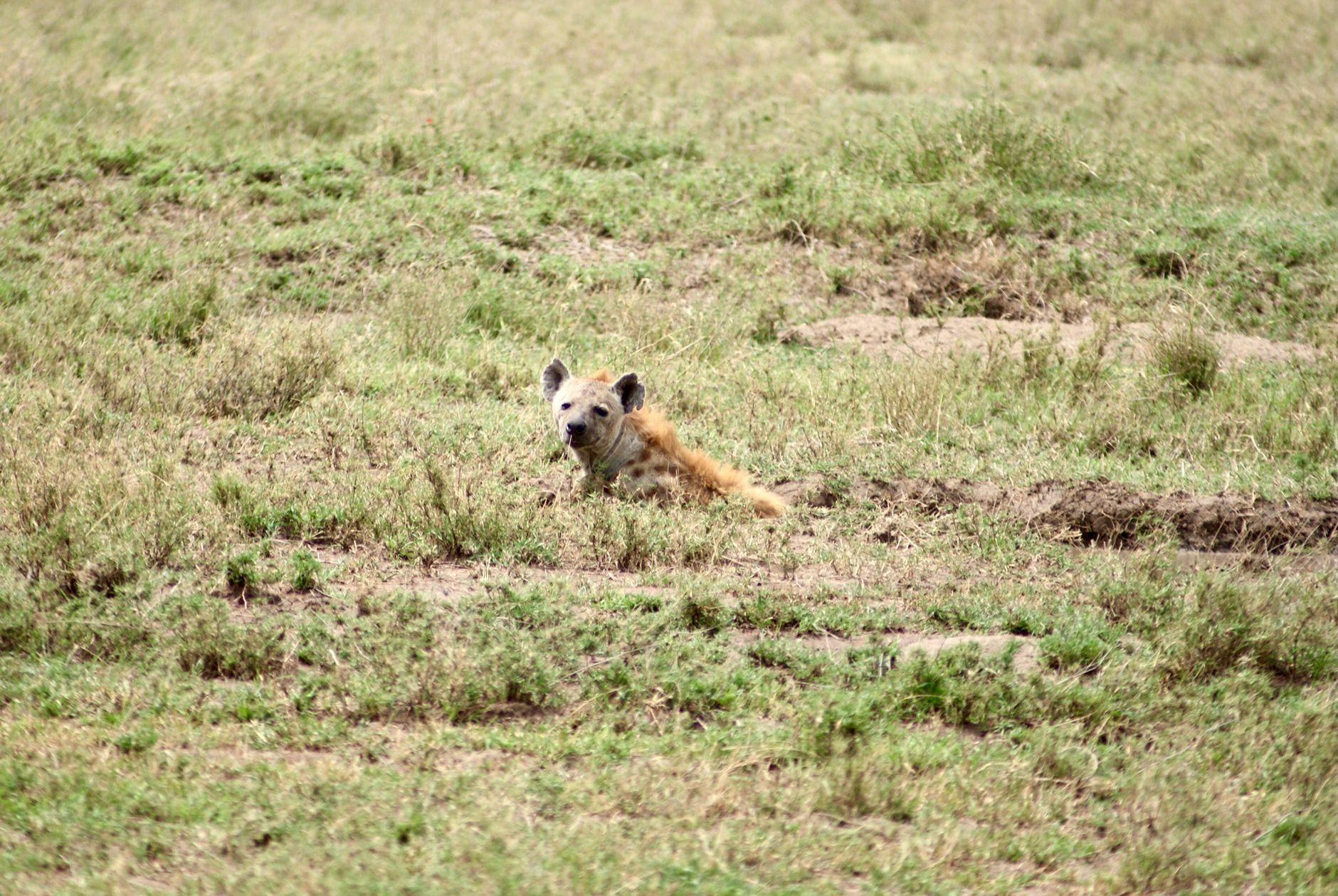
Hyenas live in clans that can include several dozen animals, run by females that outrank every male. The scavenger reputation is mostly wrong: spotted hyenas kill more than half of what they eat themselves, working in coordinated groups to bring down prey as large as a wildebeest calf. Their whooping calls at dusk are one of the most recognizable sounds of a Serengeti camp at night.
Other Predators and Smaller Wildlife Worth Watching For
The headline species get the attention, but a lot of what makes a Serengeti game drive memorable happens at ground level, in the smaller predators, reptiles and antelope that fill the gaps between sightings of lion and elephant.
Wild Dogs and Smaller Predators
African wild dogs are almost absent from Serengeti itself; sightings are rare enough that guides mention them the way birders mention a scarce migrant. Ruaha National Park, further south in Tanzania, holds the world's third-largest wild dog population, and the Ngorongoro grasslands offer better odds too. If wild dogs are the target, a private tour built around those parks beats waiting in Serengeti. Golden and black-backed jackals, servals, caracals, honey badgers and several mongoose species round out the smaller predator list, and most of them turn up on early-morning drives before the day heats up.
Nile Crocodile
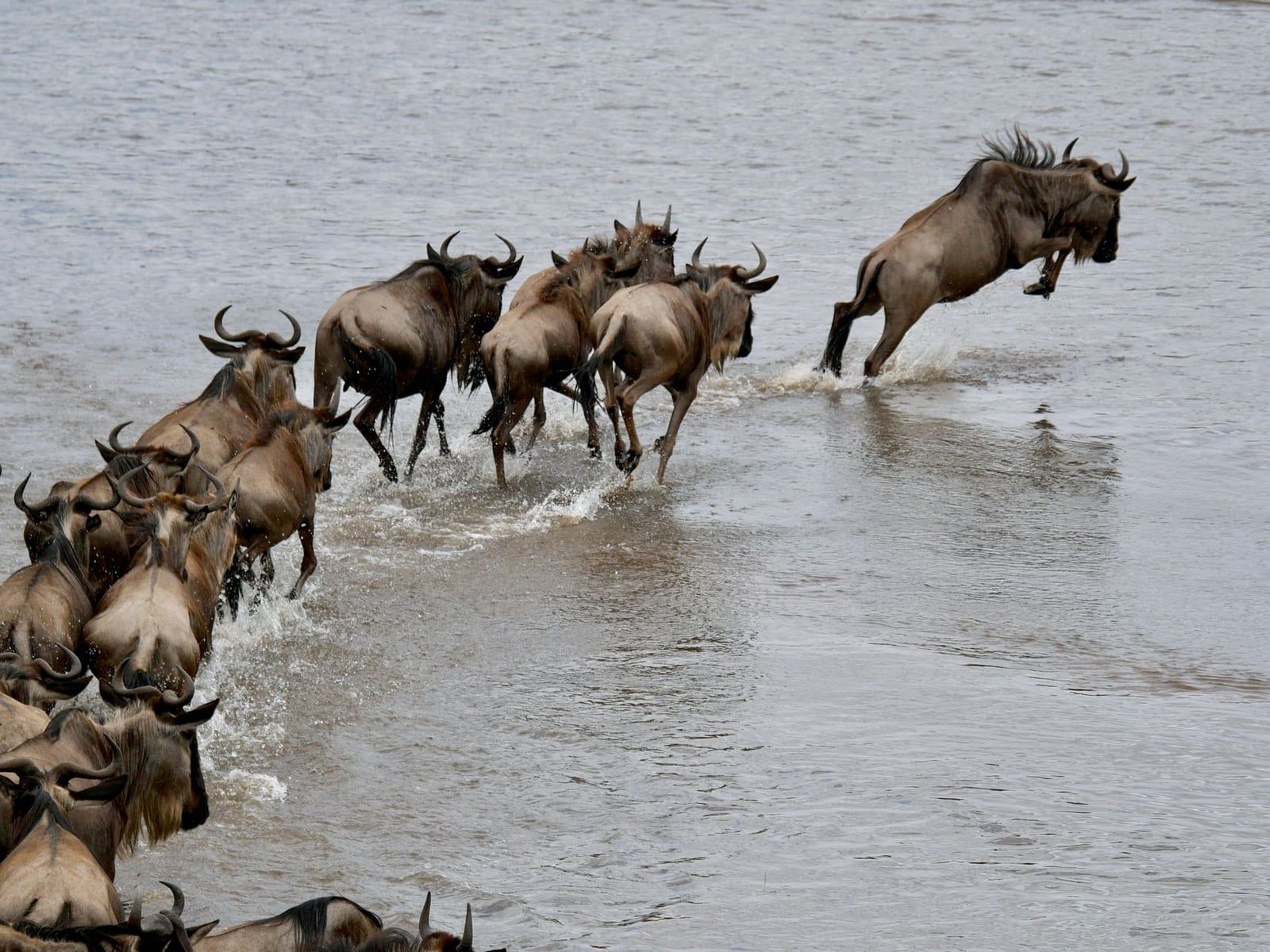
Nile crocodiles gather at the Mara and Grumeti river crossing points, lying motionless in the current until a wildebeest or zebra herd commits to a crossing. They're one reason the crossings look as chaotic as they do — a herd hesitating on the bank for an hour is reading the water for exactly this threat.
Antelope and Gazelle
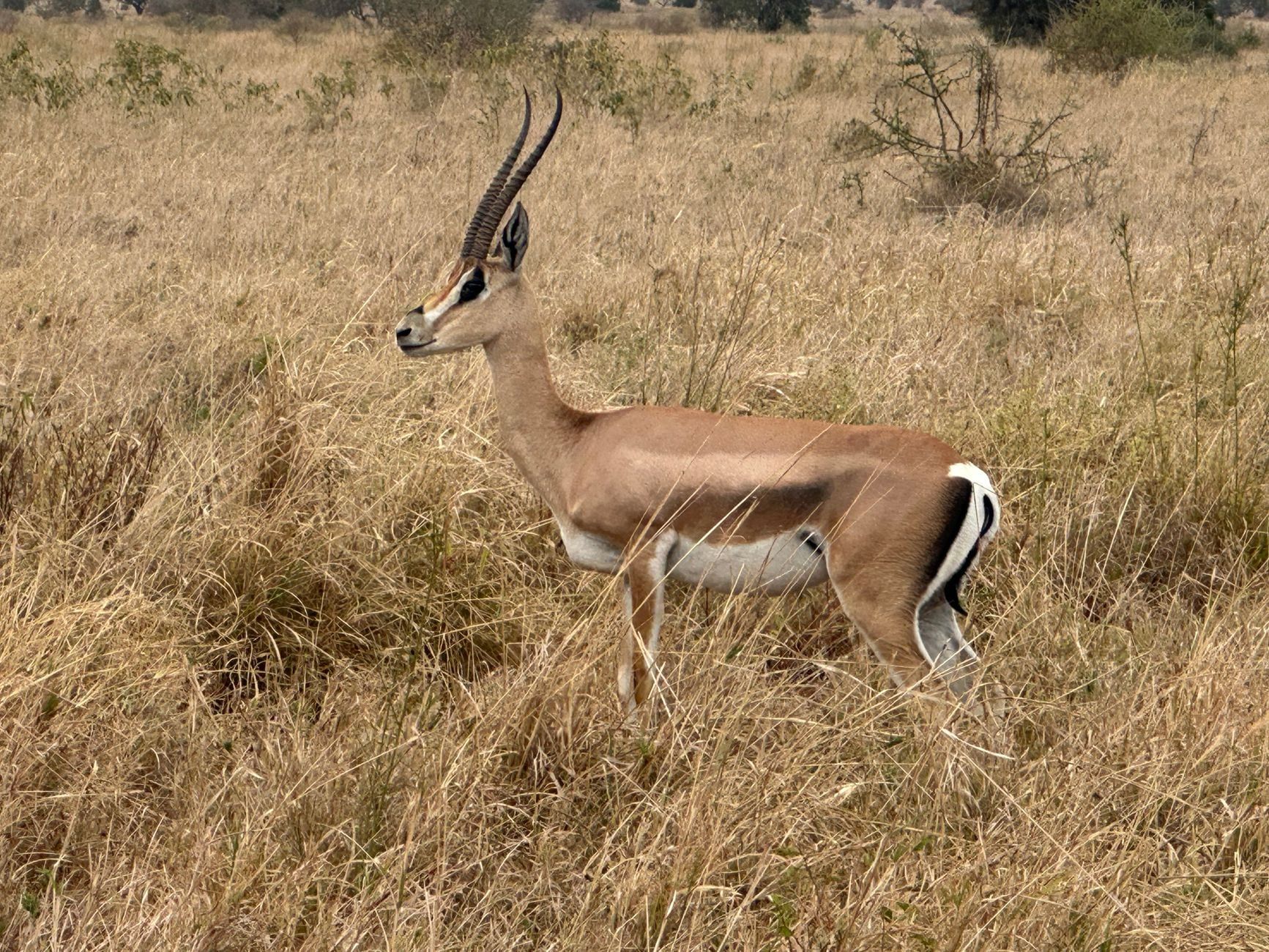
Beyond wildebeest and zebra, Serengeti's grasslands hold a long list of antelope: impala in tight harem groups, topi standing sentry on termite mounds, hartebeest and eland grazing the open plains, and the diminutive dik-dik pairing for life in thicker brush. Grant's and Thomson's gazelle fill the space in between — Thomson's alone number around 900,000 across the ecosystem — and waterbuck stick close to rivers and swamps where their shaggy coats stay damp. None of these draw a crowd the way a lion does, but they're what a lion is actually after.
Primates
Olive baboon troops and vervet monkeys turn up everywhere near camps and rivers, bold enough to raid an unattended breakfast table given the chance. Black-and-white colobus monkeys are the one worth detouring for — they stick to riverine forest along the Grumeti River in the Western Corridor and rarely venture onto open ground.
Birds of the Serengeti
Over 500 bird species have been recorded in Serengeti, more than most countries manage, and they don't need a special detour — you'll tick off dozens without leaving the vehicle on an ordinary game drive.
Near-Endemic Specialties
Three species are found almost nowhere outside the Serengeti-Mara ecosystem: the grey-breasted spurfowl, the rufous-tailed weaver and the Tanzanian red-billed hornbill. None are showy, but birders build whole itineraries around ticking off all three.
Raptors and Water Birds
Fish eagles perch over the rivers and hippo pools, their call as much a soundtrack to the park as a lion's roar at night. Bateleur eagles rock side to side in flight with barely a wingbeat, secretary birds stalk snakes on foot through the grass, and vultures of several species arrive fast wherever a carcass appears — often the first sign to guides that a kill happened nearby.
Migratory Visitors and Birding Season
European and Asian migrants arrive alongside inter-African species during the wet months, and birding peaks from November to May, when resident birds are also nesting and in full plumage. That overlaps with the quieter, cheaper season for lodges — a good trade if birds matter more to you than a packed dry-season game drive.
When and Where to See Serengeti Animals
Timing decides more than luck does. The table below lines up what's happening where, month by month, so you can match your dates to the sighting you actually want.
| Months | Region | What to Expect |
|---|---|---|
| Dec-Mar | Southern plains (Ndutu, Naabi Hill) | Calving season; heavy predator concentration hunting newborn wildebeest and gazelle |
| Apr-May | Central & Western Serengeti | Long rains; herds drift west toward the Grumeti River, roads can turn to mud |
| Jun | Western Corridor (Grumeti River) | Migration crosses the crocodile-filled Grumeti heading north |
| Jul-Oct | Northern Serengeti (Kogatende, Mara River) | Peak Mara River crossings; dry conditions make general game viewing easiest park-wide |
| Nov | Northern & Central Serengeti | Short rains begin; herds start drifting back south |
Outside the migration entirely, dry season (June-October) is the safer bet for general game viewing — thinning vegetation and shrinking waterholes concentrate lion, elephant and buffalo where you can actually find them. Wet season (January-March) trades some of that convenience for the densest predator action of the year, plus newborn animals everywhere you look in the south.
- Seronera Valley: reliable lions and leopards year-round, central to most itineraries.
- Southern plains (Ndutu, Naabi Hill): calving season and dense cheetah activity.
- Grumeti River, Western Corridor: June crossings and forest-dwelling colobus monkeys.
- Mara River, northern Serengeti: peak crossings and the park's biggest spectacle.
- Moru Kopjes: the best, though still rare, chance at black rhino.
Night drives aren't allowed inside the park itself: gates close at 18:00 and driving after dark is banned on park roads. Private lodges on the park's borders run their own after-dark drives on their own concession land, the only legal way to see Serengeti's nocturnal side, genets and hunting leopards included. A stay at a luxury lodge bordering the park is the way to add night drives to an itinerary.
For an aerial angle on all of this, a sunrise balloon flight drifts silently over the herds before a bush breakfast on landing. Check current gate hours and entrance fees before you go, since rules and rates shift by season.
FAQs About Serengeti Animals
What is the Big Nine in the Serengeti?
The Big Five — lion, leopard, elephant, buffalo and black rhino — plus cheetah, giraffe, hippo and zebra. Serengeti is one of the few parks anywhere with a shot at all nine on one trip; rhino aside, none require much luck.
How many lions are in the Serengeti?
Around 4,000 lions live across the Serengeti-Mara ecosystem, one of the largest lion populations left in Africa.
What is the best month to see the wildebeest migration?
January to March for calving on the southern plains, June for the Grumeti River crossings, and August to September for the biggest Mara River crossings in the north.
Can you see the Big Five in Serengeti in one trip?
Four of them easily. Lion, leopard, elephant and buffalo turn up regularly around Seronera; black rhino is the exception, restricted mostly to the Moru Kopjes and never guaranteed even with a good guide.
Are there wild dogs in the Serengeti?
Barely. Sightings inside the park are rare. Ruaha National Park, with the world's third-largest wild dog population, and the Ngorongoro grasslands both offer far better odds.
How many bird species are in the Serengeti?
Over 500, including three species found almost nowhere else: the grey-breasted spurfowl, rufous-tailed weaver and Tanzanian red-billed hornbill. Birding peaks November to May.
What is the rarest animal to spot in the Serengeti?
Black rhino. Poaching pushed numbers below 70 by the 1980s; the population has since recovered to roughly 200 across the ecosystem, most of them around Moru Kopjes.
Is the dry season or wet season better for seeing animals in the Serengeti?
Dry season (June-October) wins for general game viewing since thinning vegetation forces animals toward water sources. Wet season (January-March) trades that convenience for the year's densest predator action and newborn wildebeest across the southern plains.