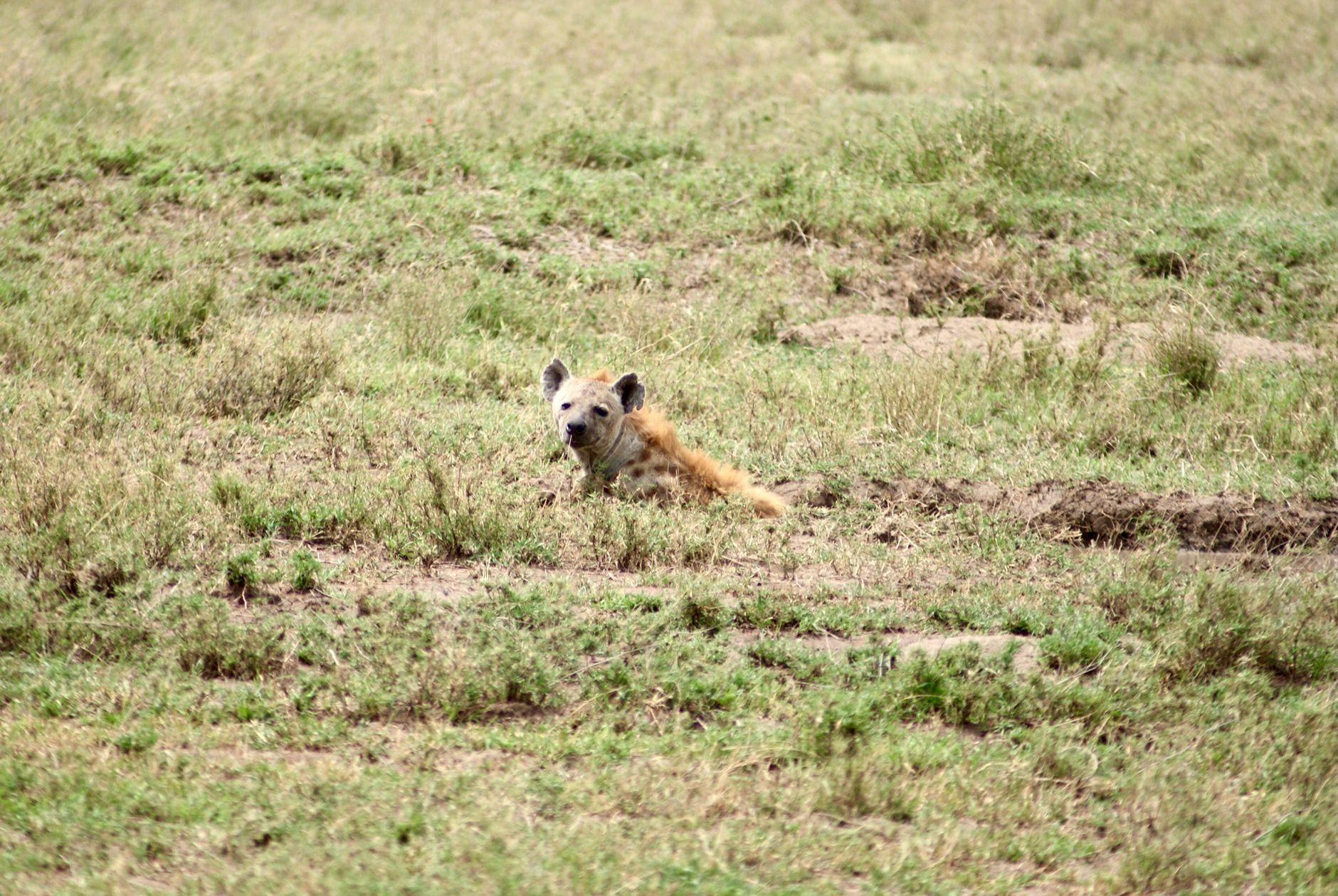
Kenya's Masai Mara and Tanzania's Serengeti are really one ecosystem wearing two names, split by a border the wildebeest never notice. Both put you within a few hundred meters of lion prides and leopards draped over acacia branches, but the trip built around each looks different. One is compact and quick to reach from Nairobi. The other is vast enough to have its own weather patterns and half a dozen distinct game-viewing zones.
This guide compares them on what actually changes a booking decision: size, cost, month-by-month migration timing, crowding at river crossings, and which park suits a four-day trip versus a two-week Northern Circuit safari. There's a straight answer, too, on whether you can fit both into one itinerary.
Masai Mara vs Serengeti at a Glance
| Feature | Masai Mara | Serengeti |
|---|---|---|
| Country | Kenya | Tanzania |
| Size | 1,510 km² (583 sq mi) | 14,750 km² (5,700 sq mi) |
| Established | 1961 | 1951 (UNESCO listed 1981) |
| Non-resident daily fee | Higher, split between reserve and private conservancies | USD 83 per adult (2026 rate) |
| Access from gateway city | 270 km, 5-6 hr drive, or 45-min flight from Nairobi | 225 km, 6-8 hr drive, or 1h10-2h40 flight from Arusha |
| Signature migration event | Mara River crossings, Jul-Oct | Crossings (Jul-Oct) plus calving season (Dec-Mar) |
The trade-off in one line: the Mara is smaller, cheaper to reach, and hands you the river-crossing spectacle without much driving. The Serengeti trades that convenience for scale, more resident game away from the crossings, and a landscape big enough to spend two weeks in without repeating a view. Either park works for a serious safari, and the choice usually comes down to time and budget rather than which has better animals.
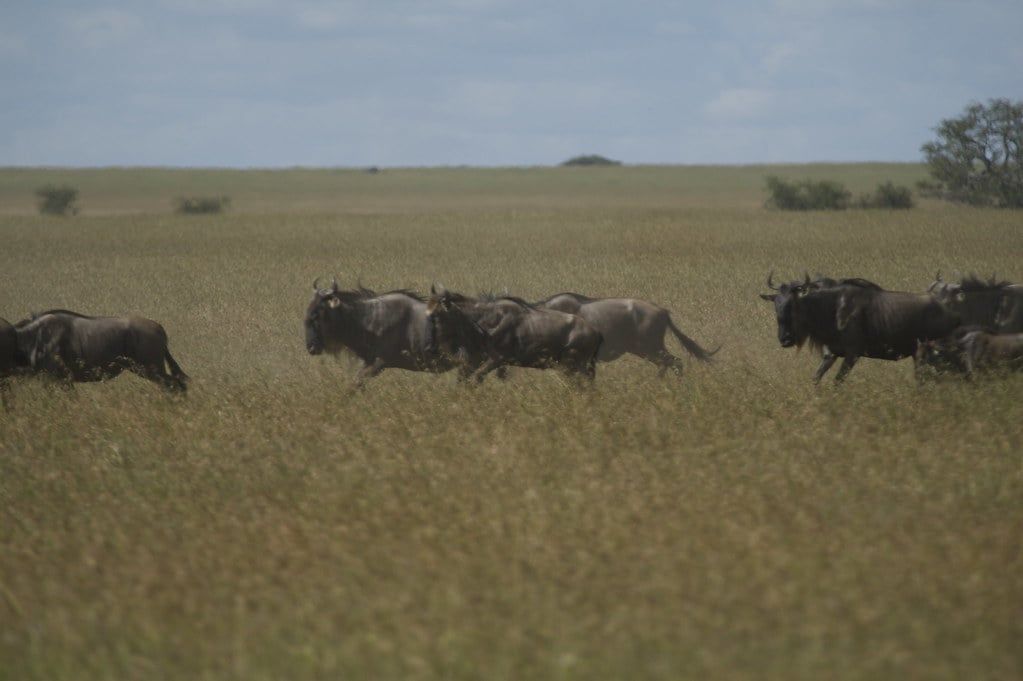
One Ecosystem, Two Countries
The Mara isn't a separate reserve bolted onto the map. It's the northern extension of the same plains system as the Serengeti, split only by the Kenya-Tanzania border. Wildlife crosses that line on its own schedule, ignoring passport control entirely. Together with the conservancies and reserves buffering both parks, the wider ecosystem spans roughly 25,000 to 30,000 km² of grassland, woodland and riverine forest.
Size shapes everything else in this comparison. Serengeti's 14,750 km² gives each vehicle, and each animal, far more room than the Mara's 1,510 km². Ngorongoro Conservation Area and the Loliondo Game Controlled Area extend the Tanzanian side south and east; on the Kenyan side, private conservancies bordering the reserve add buffer land with their own vehicle rules. For how the boundaries came together, see our overview of the Serengeti's history and highlights.
Wildlife and the Big Five
Both parks hold the Big Five, though not equally. Lion, leopard, elephant and buffalo are common across the whole ecosystem; black rhino is the exception, mostly confined to Ngorongoro Crater and small Serengeti pockets (roughly 200 individuals) rather than the open Mara plains. The Serengeti's predator numbers are substantial on paper: about 4,000 lions, 1,000 leopards and 225 cheetahs across the ecosystem, alongside roughly 2,700 elephants. The Mara doesn't publish comparable counts, but its lion density per square kilometer is often cited as among the highest in Africa, simply from packing similar species into a much smaller space.
Birdlife tips toward the Serengeti on sheer numbers, with more than 500 recorded species including the grey-crested helmet shrike, Schalow's turaco, and one of the continent's largest ostrich populations. The Mara's list is shorter mainly because there's less habitat variety to fill it. For a full species breakdown, our guide to Serengeti's Big Five and Big Nine goes deeper than a park comparison can.
The Great Migration: Where and When
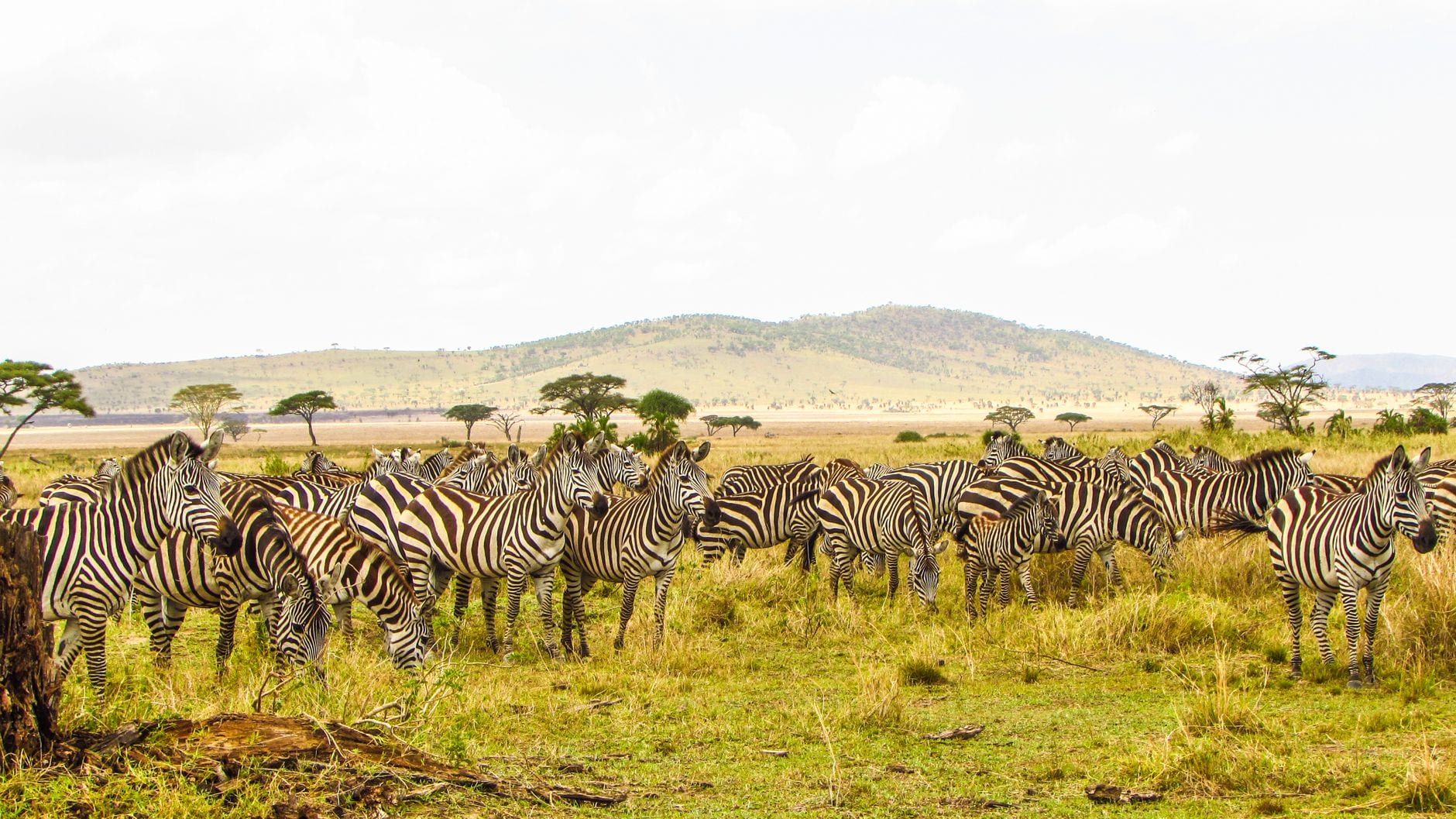
Roughly 2 million wildebeest move through the ecosystem, alongside about 900,000 Thomson's gazelles and 300,000 zebras, in a continuous clockwise loop that never really stops. Neither park has the migration as a fixed, permanent feature. It's a location, not an event, and the location shifts with the rain.
| Months | Location | What's happening |
|---|---|---|
| Dec-Mar | Southern Serengeti plains (Ndutu, Naabi Hill), Tanzania | Calving season; dense lion, hyena and cheetah activity around newborn calves |
| Apr-Jun | Western Corridor, Grumeti River, Tanzania | Herds push north and west, crossing crocodile-filled water |
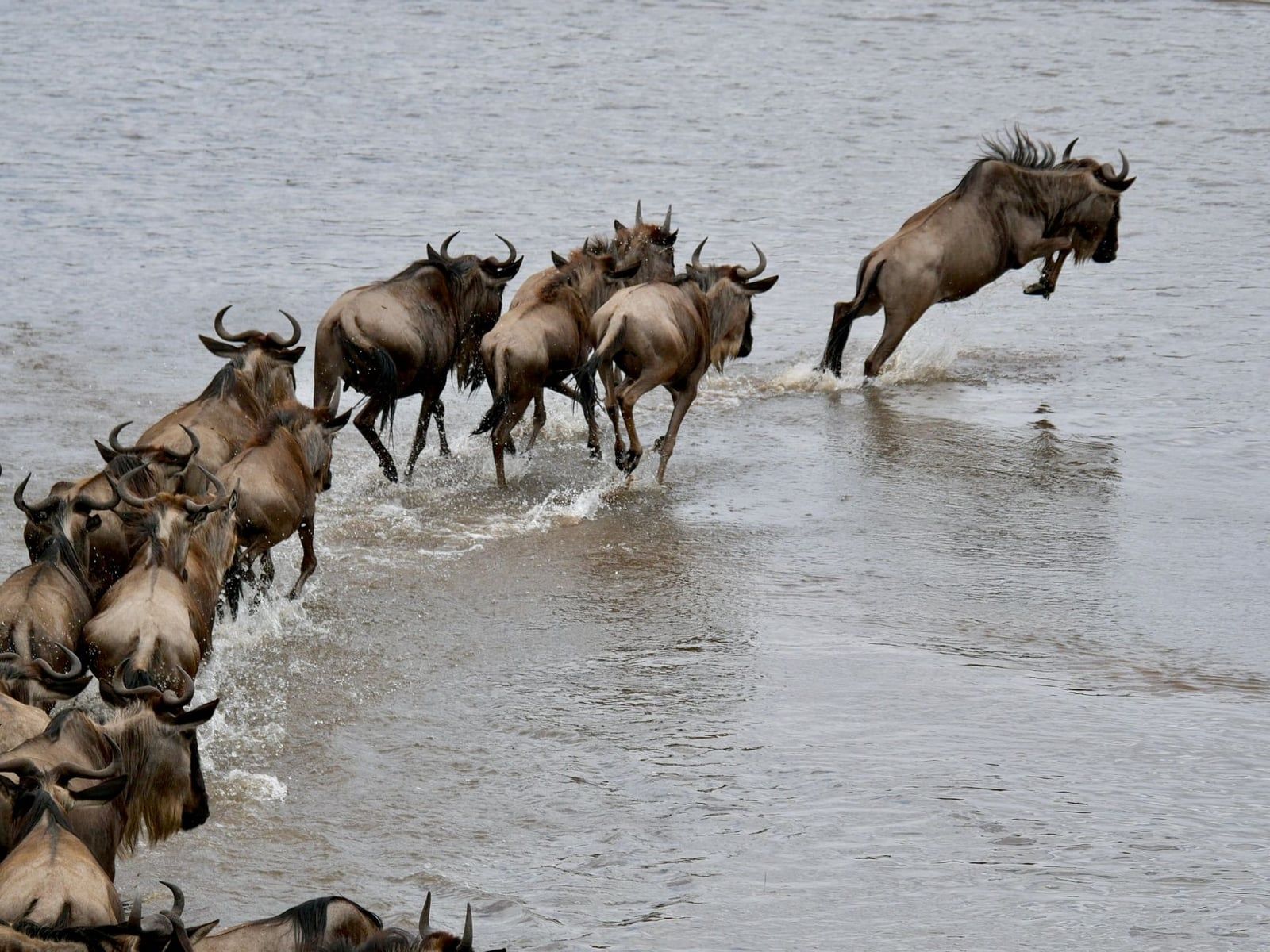
| Jul-Oct | Northern Serengeti (Kogatende) and Masai Mara | Mara River crossings, the classic dust-and-chaos scene |
| Nov-Dec | Lobo area and Loliondo, Tanzania | Herds turn south again toward the calving grounds |
Book by month, not by park name. A trip aimed at the Mara in February will miss the herds entirely, since they're calving on the Ndutu plains 300 km south. Our migration-focused Serengeti tours are built around this calendar rather than a generic best-time window, and our full migration guide covers where to stay for each phase.
Best Time to Visit Each Park
June through October is dry, dusty and the most reliable stretch for game viewing in both parks. Daytime temperatures in the Serengeti sit around 15-27°C, water sources shrink, and animals concentrate where the water remains. It's also the busiest and most expensive window in both countries, so lodges fill 8-12 months out.
December to March is underrated on the Tanzanian side. Calving season floods the southern Serengeti's Ndutu plains with newborn wildebeest and the predators that follow them, and crowds are thinner than during the July crossings. The Mara has no equivalent event this far south of the border. It's simply quieter and greener.
April and May bring the long rains: cheaper rates and fewer other vehicles, but muddy tracks and lower visibility in some areas. November and December carry shorter, less predictable showers that can also disrupt driving.
Serengeti's size lets it stay good year-round, since resident lion prides and elephant herds don't leave when the migration moves on. The Mara is more seasonal. Much of its appeal depends on the migration actually being there, so timing matters more if that's your main draw.
Cost and Getting There
Serengeti's non-resident park fee is USD 83 per adult per 24 hours (2026 rate), plus 18% VAT, with children aged 5-15 at USD 24 and under-5s free. Anyone sleeping inside the park pays an extra USD 60 concession fee per adult per night. Current rates and gate hours are on our park fees and opening hours page.
Masai Mara's fee structure is more fragmented: a reserve fee, plus a separate conservancy fee if you're staying in one of the private conservancies bordering it. Added together, a day in the Mara typically costs more than a day in the Serengeti, though conservancy fees often bundle in game drives and exclusivity that the base Serengeti rate doesn't include.
Getting to the Mara from Nairobi is the quicker leg: about 270 km, a 5-6 hour drive, or a 45-minute flight. Serengeti runs longer from Arusha, about 225 km and 6 hours to the nearest gates, up to 8 to central Seronera, or a flight of 1 hour 10 minutes to 2 hours 40 minutes depending on the airstrip. Our getting-to-Serengeti breakdown covers each route and gate.
Kenya and Tanzania are separate countries with separate e-visas and separate currencies, Kenyan shillings on one side of the border and Tanzanian shillings on the other. Budget for both if you're combining trips. Neither currency is much use once you cross.
Crowds, Conservancies and Safari Style
The Mara's small size is also its biggest crowd problem. A handful of river crossing points funnel both wildebeest and safari vehicles into the same few hundred meters of riverbank, and a dramatic crossing can draw dozens of jeeps parked bumper to bumper during peak months.
Private conservancies ringing the reserve cap vehicle numbers, allow off-road driving and night drives that the main reserve restricts, and add walking safaris. They cost more but buy space. If crowding at a crossing would ruin the day for you, that premium is worth paying, and our private safari itineraries can route around the busiest sightings entirely.
Serengeti spreads the same pressure across a much bigger map. Seronera holds the most reliable year-round game and the most vehicles; Ndutu, the Western Corridor and northern Kogatende each have their own season and their own, thinner, crowd. Off-road driving and night drives are restricted inside the national park itself but permitted in some bordering reserves, so ask what your camp's location actually allows before booking.
Landscape and Accommodation Style
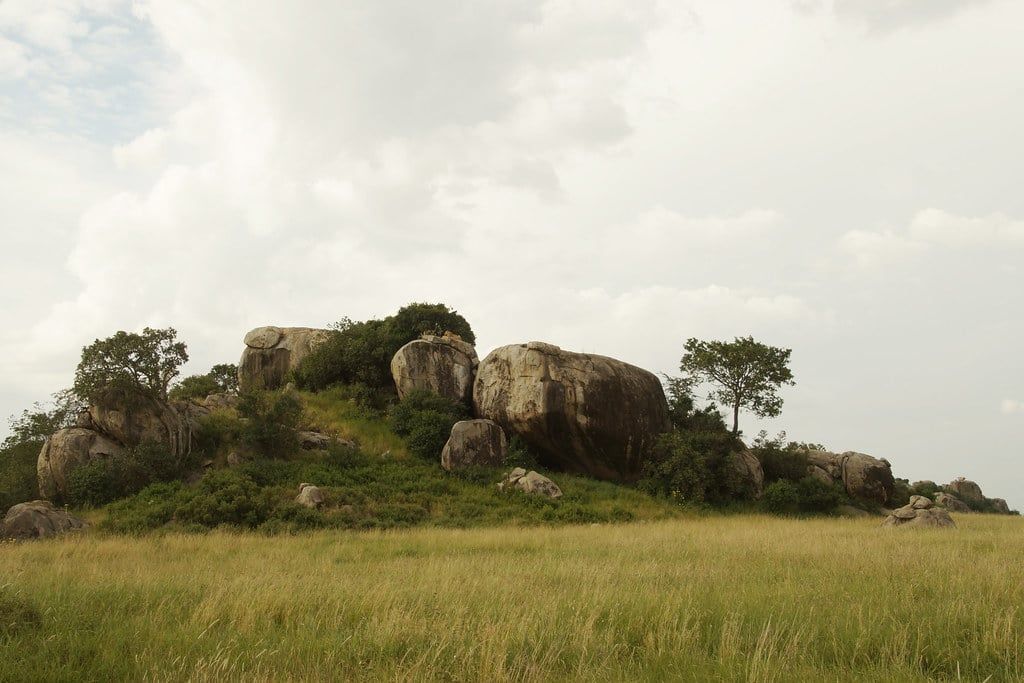
Serengeti's core landscape is flat, treeless short-grass plains broken by granite kopjes. The Simba Kopjes near Seronera are a favorite lion perch, with riverine forest along the Grumeti and Mara Rivers and acacia woodland further north. It's the view that gave the park its name, from the Maasai word for endless plains.
The Mara trades flat horizons for rolling hills and the Oloolaimutia escarpment, with the Mara River cutting through savannah rather than granite. It's a more textured landscape packed into a much smaller frame. You can see most of its defining features in a few days, which isn't true of the Serengeti.
Accommodation follows the same logic. Serengeti has permanent lodges around Seronera and mobile tented camps that relocate seasonally to follow the migration, particularly toward Ndutu and the north. The Mara leans toward fixed lodges near the main reserve gates and tented camps inside the conservancies. Either style can be booked at a budget, mid-range or top-tier level in both countries.
Which Should You Choose?
- Masai Mara: short trip via Nairobi, July-October crossings, tighter flight budget.
- Serengeti: pairing with Ngorongoro or Zanzibar, longer safari, January-March calving.
- First safari: the Mara's compact layout means less driving between sightings.
- Repeat visitors, photographers: Serengeti's zones and mobile camps chase one migration moment.
There's no universal winner here. The right park depends on how many days you have and what you want to see happen in front of you. A first-time traveler with five days and a budget flight from Nairobi gets more out of the Mara than a rushed, expensive dash into Tanzania. Someone building a two-week Northern Circuit safari around Ngorongoro Crater gets far more from staying in Tanzania and going deep, rather than adding a costly, logistically awkward hop to Kenya. Our Serengeti and Ngorongoro itineraries are built for that second kind of trip.
Can You Visit Both in One Trip?
Yes, and there are two ways to do it. The overland route crosses the border near Isebania/Sirari, a long drive best suited to budget or dedicated overland trips rather than a quick add-on.
Faster is a charter flight directly between Mara and Serengeti airstrips, roughly 45 to 60 minutes in the air instead of a full day on dirt roads and at a border post.
Either way, budget 10-14 days to do both parks properly rather than rushing through both in a week. In practice, most travelers don't combine them at all. Tanzania-based trips pair the Serengeti with Ngorongoro Crater or a Zanzibar beach extension, while Kenya-based trips add the Mara to other Kenyan parks. Combining the two big-name reserves makes more sense for a longer, once-in-a-while trip than for a first safari.
Frequently asked questions
Is Masai Mara or Serengeti better for seeing the Great Migration?
It depends on the month, not the park. July through October favors the Mara and northern Serengeti for Mara River crossings; December through March favors the southern Serengeti's Ndutu plains for calving season. Neither park has the migration year-round.
Which is cheaper, Masai Mara or Serengeti?
Serengeti's non-resident fee is a flat USD 83 per adult per day (2026 rate) plus an overnight concession fee. Masai Mara splits its fees between the standard reserve and separate private conservancies, and the combined total generally runs higher, though total trip cost also depends on flights and lodge category.
Can you visit both Masai Mara and Serengeti on the same trip?
Yes, either via the long overland border crossing near Isebania/Sirari or a 45-60 minute charter flight between the two parks' airstrips. Plan on 10-14 days to see both properly rather than rushing between them.
Which park has more wildlife, Masai Mara or Serengeti?
The Serengeti is roughly ten times larger and holds resident game across several zones year-round, including about 4,000 lions and 2,700 elephants ecosystem-wide. The Mara packs similar species into a much smaller area, which means high sighting density, especially during migration season.
Is the Masai Mara part of the Serengeti?
They're one continuous ecosystem split by the Kenya-Tanzania border. The Mara is the northern extension of the same plains system as the Serengeti, but the two are separately governed, named and priced.
Which is better for a first-time safari, Masai Mara or Serengeti?
The Mara suits shorter trips flown in via Nairobi, with less driving between reliable sightings. The Serengeti suits travelers with more days who want to pair the park with Ngorongoro Crater or Zanzibar.
Do you need a different visa for Masai Mara and Serengeti?
Yes. Kenya and Tanzania are separate countries with separate e-visa requirements and separate currencies, Kenyan shillings and Tanzanian shillings.